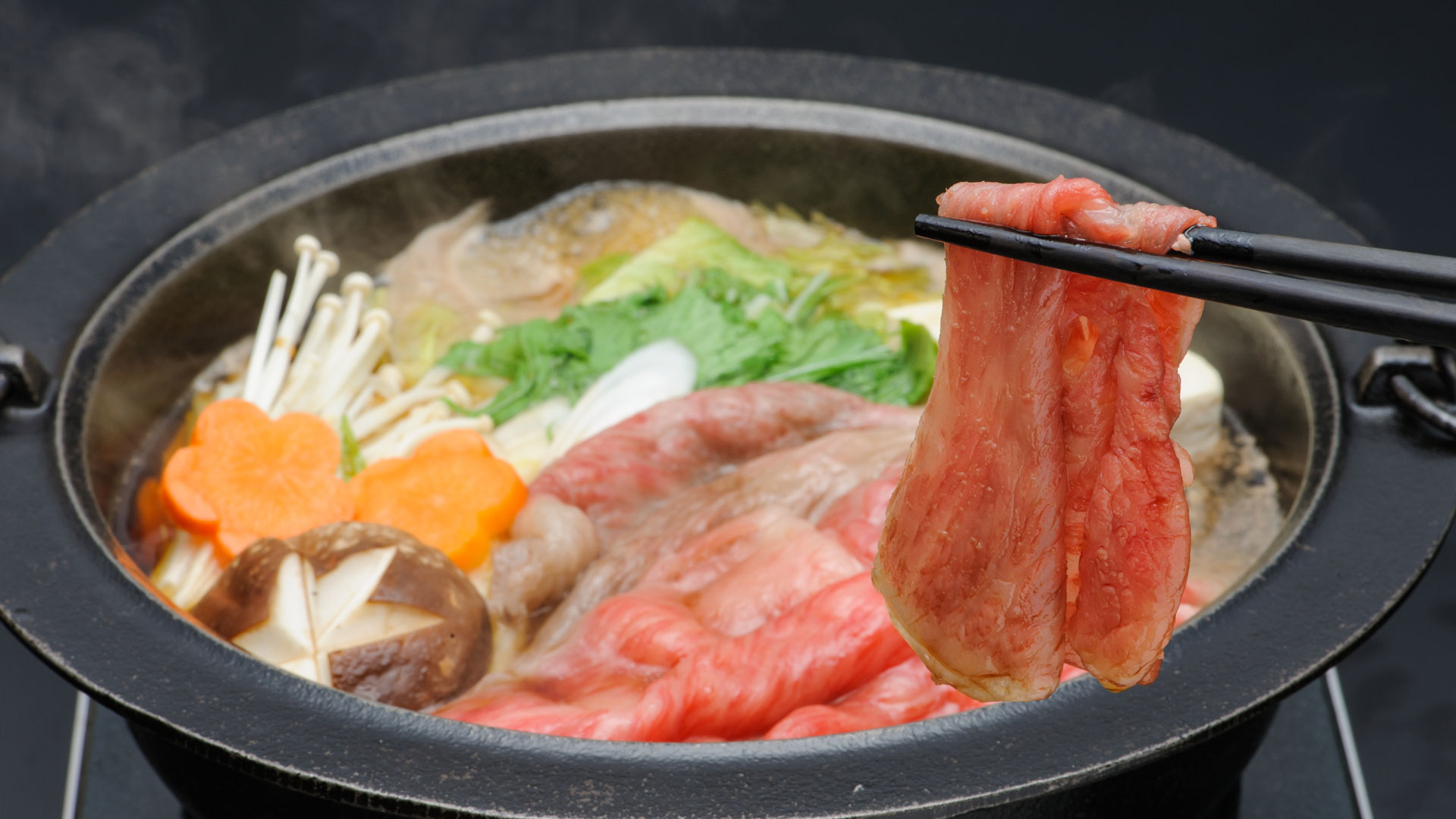
I know, chef, that you have heard of sukiyaki many times in the past. And you may even have enjoyed it.
Sukiyaki is a dish based on recipe created more than 150 years ago and has been enjoyed in Japan throughout the year since its creation. However, it is traditionally consumed in the colder months since it is often prepared at the table thereby providing additional warmth to the diners. Sukiyaki is a hot pot dish in which thinly sliced beef, assorted vegetables and tofu are cooked together in an iron pot in a broth flavored with sake, shoyu and some sugar. Preparation is most often done at the dining table whether at a restaurant or at home. There are two styles of sukiyaki preparation in Japan, Kanto (Tokyo area) style and Kansai (Kyoto area) style. In Kanto style all the ingredients, including beef, are cooked together nearly from the start in the iron pot with a prepared broth called warishita. Warishita is a mixture of dashi stock, mirin, sugar, shoyu and sake. Kansai style does not use pre-mixed warishita but sugar, shoyu and sake are individually added to the pot. For the Kansai style, first the beef is separately cooked with in the pot which has been coated with melted beef suet and no broth. When the beef is lightly cooked, the sugar, shoyu and sake are added followed by the vegetables and tofu. In this method the vegetables themselves provide enough liquid to the pot to allow all ingredients to be cooked and flavored properly without the addition of dashi stock. For both styles the cooked beef, vegetables and tofu are dipped in lightly beaten raw egg before consumption. There are several reasons for using egg. Dipping a hot cooked item, that has just been removed from the very hot pot, cools the food to a comfortable temperature for consumption, and the egg liquid also provides richer texture and mouthfeel to the ingredients.
The Kanto area recipe is enjoyed in Ibaraki Prefecture, the home of our Hitachigyu and Hitachigyu Premier beef. Using Hitachigyu in this classic recipe, of course, brings the diners the very best sukiyaki experience. The beef for sukiyaki dish is usually cut into 2mm quite thin slices. Because of this thin slicing you can use a variety of Hitachigyu cuts in the preparation. Well marbled rib eye and striploin are some of the best cuts suited for sukiyaki. Less-marbled cuts such as chuck roll, shoulder clod and top round are also equally good for sukiyaki preparation. If you are looking for less inexpensive but flavorful cut, try upper plate or lower plate. We are sure that you can create your own delicious sukiyaki style with our Hitachigyu, the premier Japanese wagyu.
Traditional sukiyaki ingredients include grilled tofu, Japanese negi scallion, shiitake mushroom, shirataki taro noodles, shungiku chrysanthemum leaves and carrot. You can replace some of these unfamiliar and exotic ingredients with those that are familiar and easily available to you. They may include Swiss chard, mizuna green leaves, mustard greens, Chinese broccoli, onion, king mushrooms, white mushrooms, endive, and others of your choice. We hope in the near future you will introduce sukiyaki using Hitachigyu with your own creative twist. The dish may be prepared in your kitchen or, if you have the capability, at the dinners’ table. If you have great ideas about your sukiyaki and would like to share them, we are delighted to receive that information. And if you have any questions about sukiyaki and its preparation, please let do us know. We are delighted to help.
Classic Kanto-style sukiyaki recipe for 4 persons
- 1-pound thinly sliced Hitachigyu beef; chef’s selection of cut
- 3 stalks Japanese negi scallion
- 2 pieces grilled tofu
- 12 pieces shiitake mushrooms
- 1 bunch shirataki taro noodles
- 1 piece carrot
- 1 bunch shungiku chrysanthemum leaves
Warishita:
- 3 1/2 tablespoons sake
- 3 1/2 tablespoons sugar
- 1/2 cup mirin
- 1/2 cup dashi stock
- 1/2 cup shoyu
- 3 raw eggs
- Beef suet
